



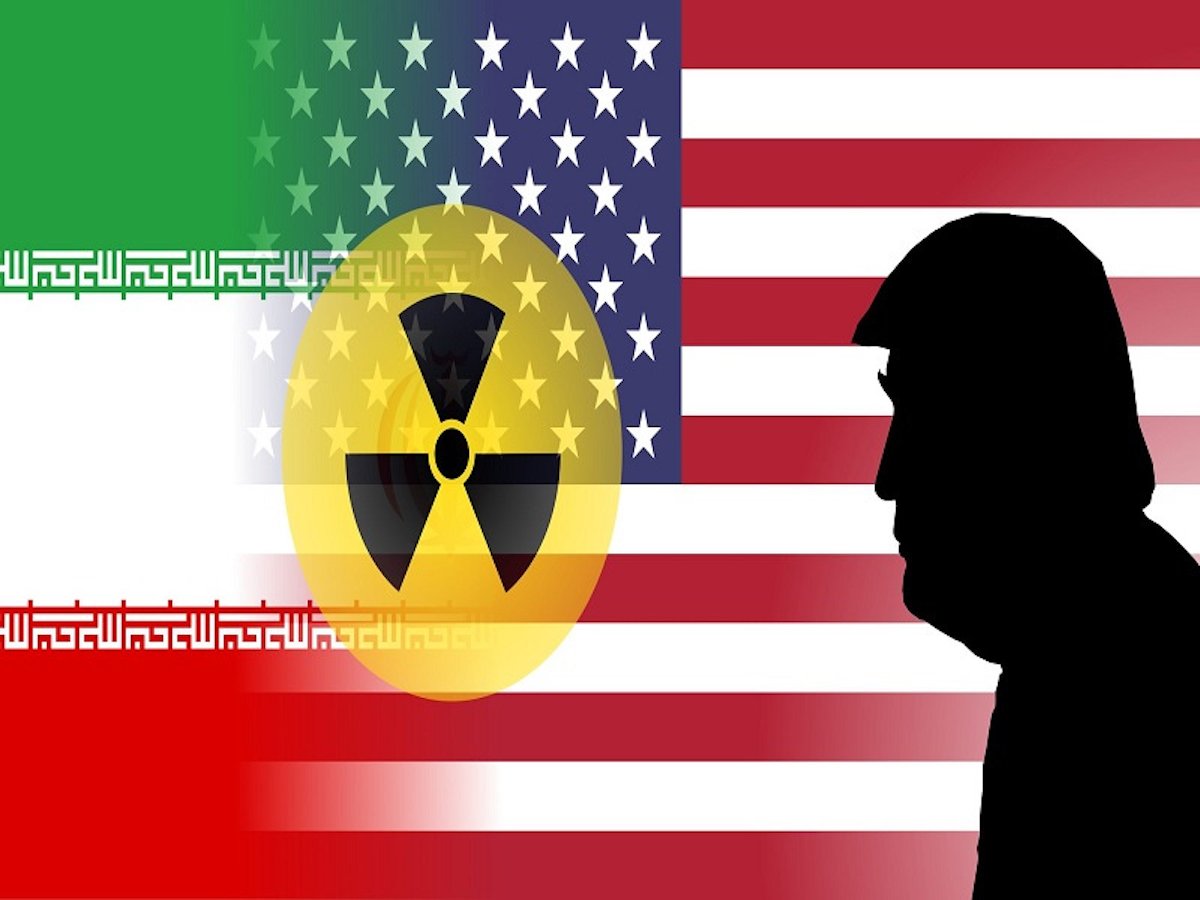
The Islamic Republic of Iran may be entering its most precarious moment since the 1979 revolution.
US naval deployments and escalating rhetoric have turned a long-running standoff into a strategic countdown. President Donald Trump has given Tehran roughly ten to fifteen days to reach a “meaningful” nuclear agreement, warning that “bad things” could follow if diplomacy fails.
Whether this ultimatum is coercive diplomacy or a prelude to military action remains unclear. What is clear is that Washington has not fully defined the political end state it seeks — significant nuclear concessions, broader limits on missiles and proxy networks or something closer to systemic change inside Iran itself.
The possibility of regime destabilization — once theoretical — is now openly discussed. Yet the United States and its partners appear underprepared for what comes next if Iran’s governing structure weakens or fractures.
That outcome would reshape the Middle East’s strategic balance. Whether it leads to stability or chaos will hinge on five critical questions.
1. Who leads after the clerics?
Recent reporting suggests Supreme Leader Ali Khamenei has quietly elevated Ali Larijani into an unusually empowered role amid rising external pressure. But Larijani is a political insider, not a senior Shiite cleric — complicating any perception that he could inherit authority in a system built around religious legitimacy.
Iran’s opposition remains fragmented. Monarchists rally around Reza Pahlavi, exile groups such as the MEK remain deeply controversial, and reformist networks inside Iran operate under severe constraints.
A look back at 1979 and the rise of the current regime provides important context: revolutionary coalitions can unite to topple a regime—and then splinter immediately over what comes next, leaving a vacuum for the unknown to step into.
Washington should resist the temptation to anoint exile figures as successors. A more durable approach is to encourage an inclusive transitional framework defined by Iranians themselves — one anchored in civilian protection, human rights and credible rule of law rather than externally imposed leadership.
2. What does a ten-day ultimatum do to escalation risk?
Compressed timelines can create leverage, but they also increase the risk of miscalculation. Even limited military action could trigger asymmetric retaliation, from maritime disruption in the Gulf to proxy escalation across the region.
For Gulf economies deeply tied to global trade, aviation and energy markets, the concern is fragility rather than panic. A single strike on critical infrastructure or shipping lanes could cascade into broader financial instability and disrupt supply chains far beyond the region.
A missile hitting Riyadh or Dubai would drastically change Middle East financial markets in second – despite regional conflict, a sense of safety and stability underwrites both markets.
Ultimatums clarify choices but narrow options. If Tehran refuses the terms, Washington may face a binary decision between escalation and retreat — each carrying long-term consequences for US credibility.
3. Do policymakers understand the cultural flashpoints that shape narratives?
In moments of crisis, symbolic decisions can carry strategic weight. One overlooked question is how the international community would handle the remains of senior Iranian leaders if conflict or regime collapse results in deaths.
The 2011 burial at sea of Osama bin Laden — intended to prevent a shrine from emerging — generated conspiracy theories that persist today. In Iran’s religious context, mishandling clerical funerary rites could inflame sectarian tensions and hand hardliners a powerful propaganda tool.
Quiet contingency planning with regional partners and religious scholars would not be about honoring authoritarian figures. It would be about denying spoilers an avoidable narrative weapon at a moment when legitimacy will be fiercely contested.
4. Who writes the check for stabilization and reconstruction?
Iran has enormous economic potential, from hydrocarbons to a highly educated population. Yet sanctions, mismanagement and potential conflict damage would require rapid stabilization funding and institutional repair.
Without early coordination, reconstruction risks becoming a geopolitical battleground — replicating the fragmented recovery seen in Syria and Libya. Outside powers could compete through contracts, influence networks and security partnerships, turning Iran into a prize fought over rather than rebuilt.
A credible framework should align Gulf partners, the United States, Europe and international financial institutions around principles that are pro-Iranian in ownership, pro-stability in sequencing and firmly anti-corruption in execution.
5. Can Iran become “old Persia” again — or is that the wrong question?
Some observers speculate that a post-Islamic Republic Iran could reconnect with a pre-1979 identity: more culturally open, economically integrated and religiously pluralistic. The nostalgia is real, particularly among diaspora communities.
But romanticizing a return to “old Persia” risks misunderstanding both history and contemporary Iranian society. The pre-revolutionary state was itself authoritarian, and the revolution reflected deep political grievances.
A sustainable transition would require balancing Iran’s civilizational identity with inclusive governance that protects minorities — including Baha’is and Sunnis — while rebuilding trust between state and society.
Iran’s global diaspora could become one of the country’s greatest strategic assets. But talent and capital will not return without rule of law, property rights and credible institutions.
The stakes of getting it wrong
Trump’s ultimatum has compressed years of strategic debate into days. Diplomacy may still prevail, but policymakers must prepare for scenarios where it does not.
History offers sobering lessons. Iraq, Libya and Afghanistan demonstrate that weakening authoritarian systems without a coherent post-conflict strategy can produce instability worse than the status quo.
Iran has stronger institutions, a deeper national identity and immense human capital. Yet those same strengths could become fault lines if transition planning remains reactive rather than deliberate.
The time to answer these questions is not after the deadline expires, but now — before events force hurried decisions of earth-shaking consequence.
Kurt Davis Jr. is a Non-resident senior fellow at the Atlantic Council