



Tehran may either fracture under combined pressure or endure in a weakened state, stripped of key deterrent capabilities for years
“There is no precedent for regime change through an air campaign,” Brig. Gen. (res.) Eran Ortal told The Media Line.
There is no precedent for regime change through an air campaign
As the joint US-Israel strike campaign against Iran moved deeper into a multiday fight, analysts said the central question is no longer whether airpower can wreck military infrastructure—it can—but whether leadership losses, communications breakdowns, and sustained pressure can crack Tehran’s hold enough to trigger collapse from within. The alternative end state is narrower but still consequential: a surviving government stripped of key military capabilities and coerced into a far weaker regional posture for years.
Air campaigns can shatter arsenals and paralyze command-and-control, but they rarely topple regimes unless political collapse follows inside the target state. Ortal said this war is now testing whether Iran is entering that kind of internal moment.
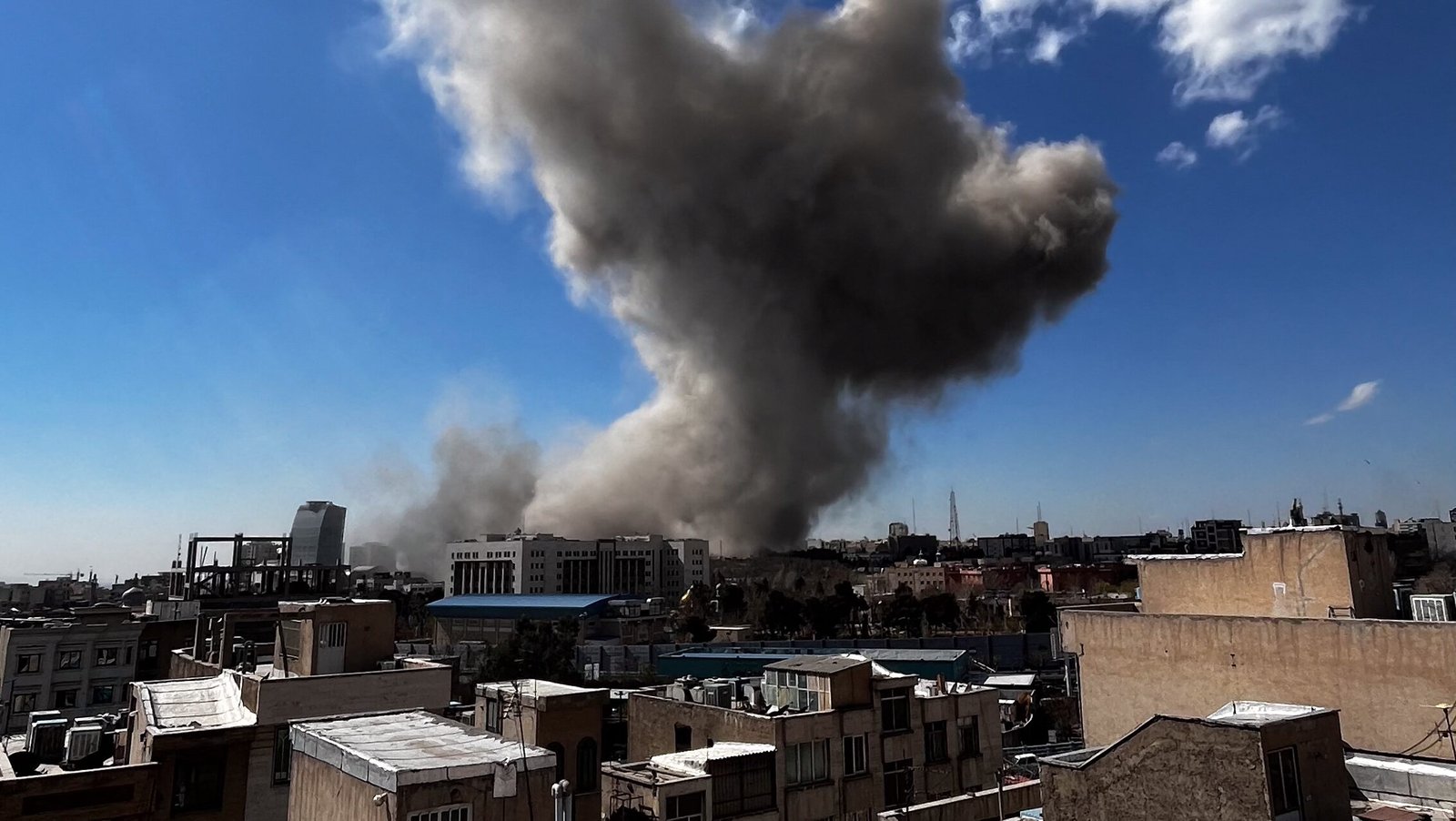
Since February 28, when Washington launched Operation Epic Fury and Israel began Operation Roaring Lion, US and Israeli forces have carried out waves of strikes aimed at Iranian command nodes, missile infrastructure, and other strategic targets.
The goal is not for the regime to fall, but to create conditions that will enable the Iranian people to topple it
“The goal is not for the regime to fall, but to create conditions that will enable the Iranian people to topple it,” Professor Danny Orbach, a military historian from the Hebrew University of Jerusalem, told The Media Line. “If the Iranians don’t take advantage of the opportunity, the war might end with less ambitious goals achieved—the destruction of the Iranian navy, its missile arsenal, and the remnants of its nuclear program.”
CENTCOM described the opening phase as an attack package launched from air, land, and sea, involving cruise missiles and advanced fighter aircraft. US officials portrayed the initial strike package as one of the most concentrated deployments of American firepower in the region in a generation.
On social media, footage showed Iranians celebrating in the streets after confirmation was made public that Supreme Leader Ayatollah Ali Khamenei had been killed in an airstrike, as strikes and counterstrikes pushed the conflict beyond a conventional “degrade capabilities” campaign and into an uncertain political endgame.
Israeli Prime Minister Benjamin Netanyahu and President Donald Trump encouraged Iranians to seize the moment and overthrow the regime. The air campaign is intended to help set that chain of events in motion, though there is no guarantee it will happen.
“The duration of the operation depends on its goal,” Ortal said. “This goal could change as the success of the operation becomes apparent.”
Israeli officials said the opening days brought heavy strike volume, with hundreds of targets hit and more than 1,200 munitions dropped, a pace that officials said could indicate a prolonged campaign.
Ortal framed what comes next as two broad paths. In the first, he said, leadership losses and a communications breakdown combine with extreme public pressure to produce a rupture that ends the regime—an outcome he stressed airpower alone has not historically produced.
“Seeing Iranians celebrating the attack in the streets increases the optimism that this scenario could materialize,” Ortal explained. “This could create a domino effect that cannot be foreseen in which the disappearance of senior leadership, major communications disruption, and extreme public pressure destabilize the leadership, who then abandons their positions.”
If that cascade does not happen, Ortal said the likely endpoint may be a government that survives politically but is left strategically broken. “This will leave the regime without military capabilities, weak and neutralized and fully subordinate to American whims and future coercion,” he said.
For Orbach, the campaign’s political bet is tied to a target set that tends to receive less attention than missiles and nuclear facilities: Iran’s ability to project power at sea. “The navy is more important than what most people think,” he said. “The navy is the ability to project power, especially through the threat of blocking the Hormuz Strait. Its destruction will humiliate them and turn them into a country that cannot project power.”
The Strait of Hormuz remains a pressure point with global consequences, carrying roughly a fifth of the world’s traded oil. Even limited disruption can rattle energy markets, shipping schedules, and insurance costs for commercial traffic, and the loss of credible maritime leverage would narrow Tehran’s ability to coerce neighbors or threaten the global economy during crises.
The broader logic of the strikes is rooted in the structure Tehran built over decades: a regional proxy network paired with missiles and drones designed to deter direct attack and impose costs through escalation. Degrading those tools changes Iran’s bargaining power as much as its battlefield options.
“Iran’s ability to influence the Middle East is tied to two abilities—its proxies and its missiles,” Ortal said. “Iran no longer has air defense systems, and its missile launchers are gradually depleting. Iran has no ability to face this, leaving the regime subdued to American pressure it will not be able to withstand.”
Iran’s ability to influence the Middle East is tied to two abilities—its proxies and its missiles
Iran’s nuclear program remains the central backdrop. The 2015 Joint Comprehensive Plan of Action temporarily restricted aspects of Tehran’s enrichment program in exchange for sanctions relief, but after the US withdrawal in 2018, Iran expanded enrichment and reduced international monitoring, raising tensions that set the stage for the current confrontation.
Orbach argued that if Washington and Jerusalem want more than a military rollback—and instead aim for collapse from within—they would need to sustain pressure and widen the target set beyond headline military assets to the regime’s internal enforcement apparatus, including the institutions used to suppress protests and enforce control.
“The way to increase the odds of toppling the regime is to eliminate its leader and his heirs, in several rounds, rendering them weak and scared,” Orbach said, estimating the chances of the regime surviving are slim. “In addition, the oppression mechanisms of the regime also need to be hit. The question is how long Israel and the US will persist in this effort.”
Iran’s internal condition may matter as much as the strike count. Years of sanctions, corruption, and heavy security spending have strained the economy, while inflation, infrastructure decay, electricity shortages, and water crises have deepened public frustration—factors that could magnify political aftershocks if the leadership and control systems continue to falter.
“Iran’s economy is in a catastrophic state and deteriorating further,” Orbach said. “This will only worsen after the war, including raging inflation and the water crisis. Add to this a succession struggle and popular unrest, and it is hard to see the regime surviving in the long run.”
Even if the campaign’s political ambition narrows over time, Ortal said the military impact alone could reshape the region for years. “Even if the goals of the operation will be downgraded, still Iran will be rendered extremely weak and subdued for a substantial number of years,” he said.
In the near term, analysts said four indicators will show which direction the campaign is taking. One is whether strikes expand beyond military assets to the regime’s internal enforcement apparatus. Another is whether Iran’s naval leverage in and around the Strait of Hormuz is neutralized. A third is whether internal unrest grows beyond scattered signals into sustained pressure. The fourth is whether Washington and Jerusalem begin describing success in narrower terms tied to long-term military degradation.
What remains uncertain is the central fact Ortal pointed to: airpower can decapitate, disrupt, and degrade, but it cannot vote, march, or govern. The coming days may determine whether the strikes merely dismantle Iran’s security apparatus—or whether they open a path for Iranians themselves to dismantle the system that wields it, defying the history Ortal says has held for air campaigns.