



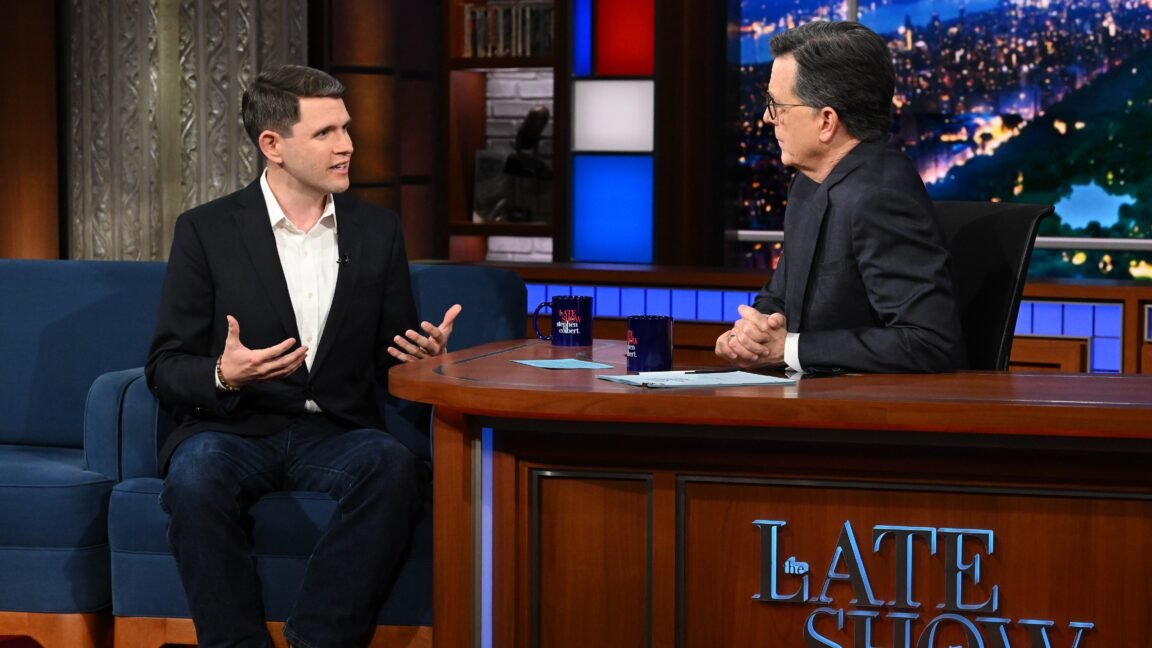
In the Trump FCC’s latest series of attacks on TV broadcasters, Federal Communications Commission Chairman Brendan Carr has been threatening to enforce the equal-time rule on daytime and late-night talk shows. The interview portions of talk shows have historically been exempt from equal-time regulations, but Carr has a habit of interpreting FCC rules in novel ways to target networks disfavored by President Trump.
Critics of Carr point out that his threats of equal-time enforcement apply unequally since he hasn’t directed them at talk radio, which is predominantly conservative. Given the similarities between interviews on TV and radio shows, Carr has been asked to explain why he issued an equal-time enforcement warning to TV but not radio broadcasters.
Carr’s responses to the talk radio questions have been vague, even as he tangled with Late Show host Stephen Colbert and launched an investigation into ABC’s The View over its interview with Texas Democratic Senate candidate James Talarico. In a press conference after the FCC’s February 18 meeting, Deadline reporter Ted Johnson asked Carr why he has not expressed “the same concern about broadcast talk radio as broadcast TV talk shows.”
The Deadline reporter pointed out that “Sean Hannity’s show featured Ken Paxton in December.” Paxton, the Texas attorney general, is running for a US Senate seat in this year’s election. Carr claimed in response that TV broadcasters have been “misreading” FCC precedents while talk radio shows have not been.
“It appeared that programmers were either overreading or misreading some of the case law on the equal-time rule as it applies to broadcast TV,” Carr replied. “We haven’t seen the same issues on the radio side, but the equal-time rule is going to apply to broadcast across the board, and we’ll take a look at anything that arises at the end of the day.”
Carr’s radio claim “a bunch of nonsense”
Carr didn’t provide any specifics to support his claim that radio programmers have interpreted precedents correctly while TV programmers have not. The most obvious explanation for the disparate treatment is that Carr isn’t targeting conservative talk radio because he’s primarily interested in stifling critics of Trump. Carr has consistently used his authority to fight Trump’s battles against the media, particularly TV broadcasters, and backed Trump’s declaration that historically independent agencies like the FCC are no longer independent from the White House.
Carr’s claim that TV but not radio broadcasters have misread FCC precedents is “a bunch of nonsense,” said Gigi Sohn, a longtime lawyer and consumer advocate who served as counselor to then-FCC Chairman Tom Wheeler during the Obama era. Carr “was responding to criticism from people like Sean Hannity that the guidance would apply to conservative talk radio just as much as it would to so-called ‘liberal’ TV,” Sohn told Ars. “It doesn’t matter whether a broadcaster is a radio broadcaster or a TV broadcaster, the Equal Opportunities law and however the FCC implements it must apply to both equally.”
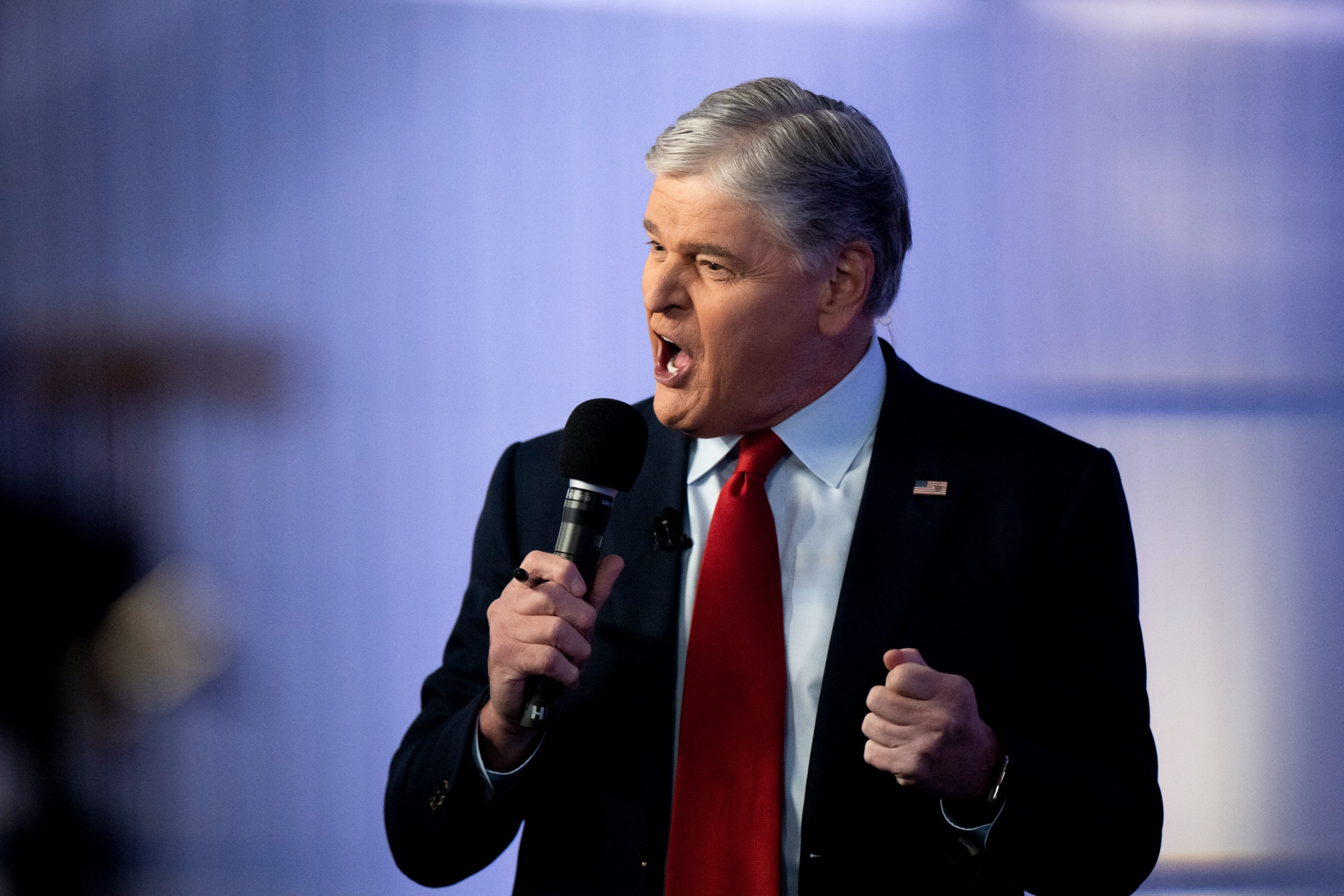
Hannity, who hosts a Fox News show and a nationally syndicated radio show, pushed back against content regulation shortly after Carr’s FCC issued the equal-time warning to TV broadcasters in January. “Talk radio is successful because people are smart and understand we are the antidote to corrupt and abusively biased left wing legacy media,” Hannity said in a statement to the Los Angeles Times. “We need less government regulation and more freedom. Let the American people decide where to get their information from without any government interference.”
Carr’s claim of misreadings relates to the bona fide news exceptions to the equal-time rule, which is codified under US law as the Equal Opportunities Requirement. The rule requires that when a station gives time to one political candidate, it must provide comparable time and placement to an opposing candidate if an opposing candidate makes a request.
But when a political candidate appears on a bona fide newscast or bona fide news interview, a broadcaster does not have to make equal time available to opposing candidates. The exception also apples to news documentaries and on-the-spot coverage of news events.
Equal time didn’t apply to Jay Leno or Howard Stern
In the decades before Trump appointed Carr to the FCC chairmanship, the commission consistently applied bona fide exemptions to talk shows that interview political candidates. Phil Donahue’s show won a notable exemption in 1984, and over the ensuring 22 years, the FCC exempted shows hosted by Sally Jessy Raphael, Jerry Springer, Bill Maher, and Jay Leno. On the radio side, Howard Stern won a bona fide news exemption in 2003.
Despite the seemingly well-settled precedents, the FCC’s Media Bureau said in a January 21 public notice that the agency’s previous decisions do not “mean that the interview portion of all arguably similar entertainment programs—whether late night or daytime—are exempted from the section 315 equal opportunities requirement under a bona fide news exemption… these decisions are fact-specific and the exemptions are limited to the program that was the subject of the request.”
The Carr FCC warned that a program “motivated by partisan purposes… would not be entitled to an exemption under longstanding FCC precedent.” But if late-night show hosts are “motivated by partisan purposes,” what about conservative talk radio hosts? Back in 2017, Hannity described himself as “an advocacy journalist.” In previous years, he said he’s not a journalist at all.
“Remember when Sean Hannity used to claim he wasn’t a journalist then claimed to be an ‘advocacy journalist’?” Harold Feld, a longtime telecom lawyer and senior VP of advocacy group Public Knowledge, told Ars. “Given that the Media Bureau guidance leans heavily into the question of whether the motivation is ‘for partisan purposes’ or ‘designed for the specific advantage of a candidate,’ it would seem that conservative talk radio is rather explicitly a problem under this guidance.”
“To put it bluntly, Carr’s explanation that shows that Trump has expressly disliked are ‘misreading’ the law, while conservative radio shows are not, strains credulity,” Feld said.
Conservative radio boomed after FCC ditched Fairness Doctrine
Conservative talk radio benefited from the FCC’s long-term shift away from regulating TV and radio content. A major change came in 1987 when the FCC decided to stop enforcing the Fairness Doctrine, a decision that helped fuel the late Rush Limbaugh’s success.
FCC regulation of broadcast content through the Fairness Doctrine had been upheld in 1969 by the Supreme Court in the Red Lion Broadcasting decision, which said broadcasters had special obligations because of the scarcity of radio frequencies. But the Reagan-era FCC decided 18 years later that the scarcity rationale “no longer justifies a different standard of First Amendment review for the electronic press” in “the vastly transformed, diverse market that exists today.” The FCC made that decision after an appeals court ruled that the FCC acted arbitrarily and capriciously in its enforcement of the doctrine against a TV station.
Even where the FCC didn’t eliminate content-based rules, it reduced enforcement. But after decades of the FCC scaling back enforcement of content-based regulations, Donald Trump was elected president.
Trump’s first FCC chair, Ajit Pai, rejected Trump’s demands to revoke station licenses over content that Trump claimed was biased against him. Pai and his successor, Biden-era FCC Chairwoman Jessica Rosenworcel, agreed that the First Amendment prohibits the FCC from revoking station licenses simply because the president doesn’t like a network’s news content.
After winning a second term, Trump promoted Carr to the chairmanship. Carr, an unabashed admirer of Trump, has said in interviews that “President Trump is fundamentally reshaping the media landscape” and that “President Trump ran directly at the legacy mainstream media, and he smashed a facade that they’re the gatekeepers of truth.” Carr describes Trump as “the political colossus of modern times.”
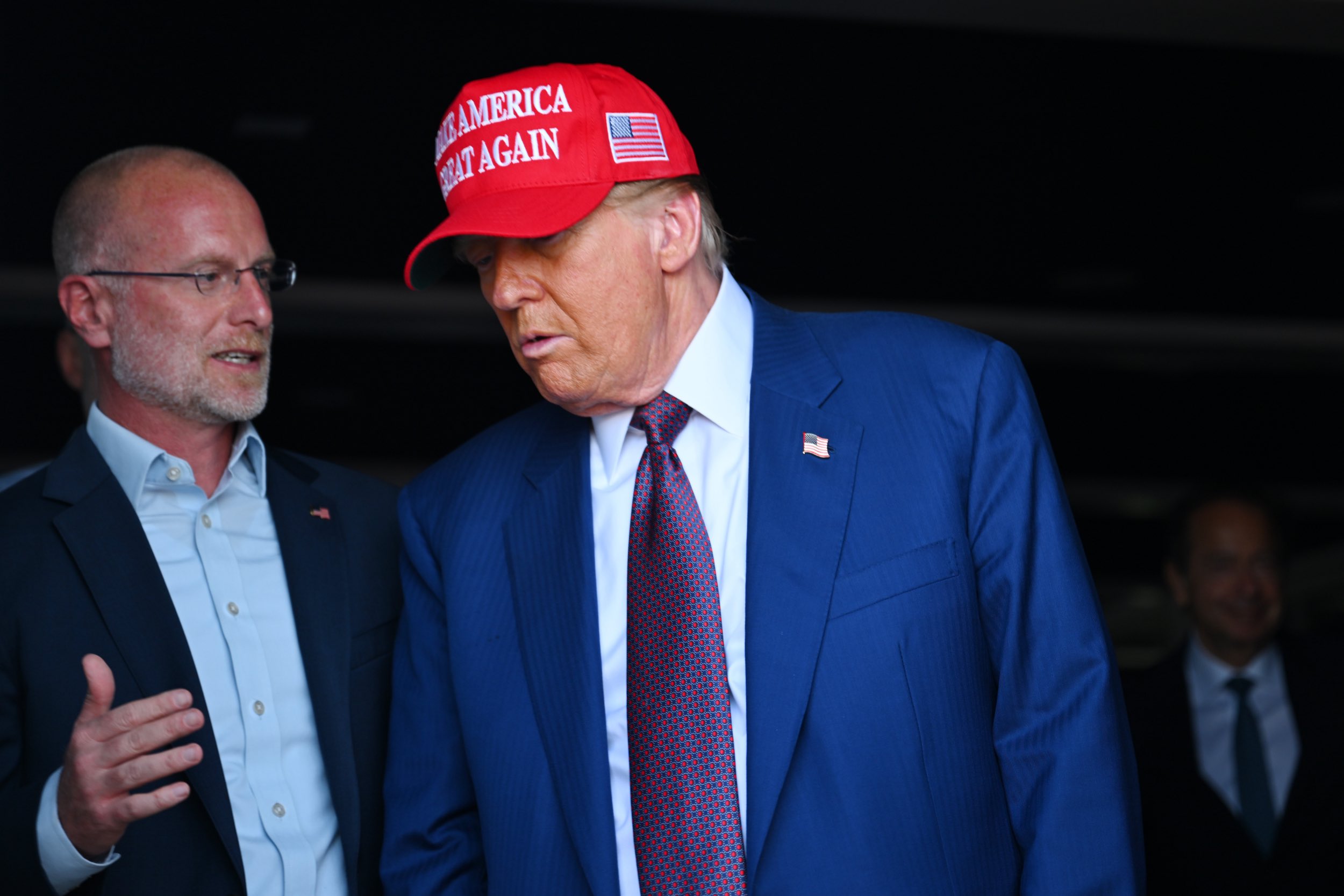
Carr has led the charge in Trump’s war against the media by repeatedly threatening to revoke licenses under the FCC’s rarely enforced news distortion policy. Carr’s aggressive stance, particularly in his attacks on ABC’s Jimmy Kimmel, even alarmed prominent Republicans such as Sens. Rand Paul (R-Ky.) and Ted Cruz (R-Texas). Cruz said that trying to dictate what the media can say during Trump’s presidency will come back to haunt Republicans in future Democratic administrations.
With both the news distortion policy and equal-time rule, Carr hasn’t formally imposed any punishment. But his threats have an effect. Kimmel was temporarily suspended, CBS owner Paramount agreed to install what Carr called a “bias monitor” in exchange for a merger approval, and Texas-based ABC affiliates have filed equal-time notices with the FCC as a result of Carr’s threats against The View.
Colbert said on his show that CBS forbade him from interviewing Talarico because of Carr’s equal-time threats. CBS denied prohibiting the interview but acknowledged giving Colbert “legal guidance,” and Carr claimed that Colbert lied about the incident.
Colbert did not put his interview with Talarico on his broadcast show but released it on YouTube, where it racked up nearly 9 million views. “Only a handful of people would’ve seen it if it had run live,” Christopher Terry, a professor of media law and ethics at the University of Minnesota, told Ars. “But what is it up to, 8 million views on YouTube now? It’s like the biggest thing, everybody in the world’s talking about it now. CBS gave Talarico the best press they ever could have by not letting him on the air… Oldest lesson in the First Amendment handbook, the more you try to suppress speech, the more powerful you make it.”
FCC misread its own rules, Feld says
Feld said the Carr FCC’s public notice “misreads the law and ignores inconvenient precedent.” The notice describes the equal-time rule as a public-interest obligation for broadcasters that have licenses to use spectrum, and Carr has repeatedly said the rule is only for licensed broadcasters. But Feld said the rule also applies to cable channels, which are referred to as community antenna television systems in the Equal Opportunities law as written by Congress.
Moreover, Feld said the FCC guidance “conflates two separate statutory exemptions,” the bona fide newscast exemption and the bona fide news interview exemption. FCC precedents didn’t find that Howard Stern and Jerry Springer were doing newscasts but that their interviews “met the criteria for a bona fide news interview,” Feld said. Despite that, the Carr FCC’s “guidance appears to require that Late Night Shows must be news shows, not merely host an interview segment,” he said.
The FCC guidance describes the Jay Leno decision as an outlier that was “contrary” to a 1960 decision involving Jack Paar and “the first time that such a finding had been applied to a late night talk show, which is primarily an entertainment offering.”
Feld pointed out that Politically Incorrect with Bill Maher was the first late-night show to receive the exemption in 1999, seven years before Leno. Maher’s show was on ABC at the time. The FCC guidance also “fails to explain any meaningful difference” between late-night shows and afternoon shows like Jerry Springer’s, Feld said.
Carr may label TV hosts as “partisan political actors”
At the February 18 press conference, Johnson asked Carr to explain how the FCC is “assessing whether a candidate appearance on a talk show is motivated by partisan purposes.” The reporter asked if there was specific criteria, like a talk show host giving money to a political candidate or hosting a fundraiser.
“Yeah it’s possible, all of that could be relevant,” Carr said. Whether a program is “animated by a partisan political motivation” can be determined “through discovery,” and “people can come forward with their own showings in a petition for a declaratory ruling, but this is something that will be explored,” Carr said. “It’s part of the FCC’s case law, and the idea is that if you’re a partisan political actor under the case law, then you’re likely not going to qualify under the bona fide news exception. That’s OK, it just means you have to either provide equal airtime to the different candidates or there’s different ways you can get your message out through streaming services and other means for which the equal-time rule doesn’t apply.”
In a follow-up question, Johnson asked, “a partisan political actor would mean a talk show host or someone whose show it is?” Carr replied, “It could be that, yeah, it could be that.”
Carr confirmed reports that the FCC is investigating The View over the show’s interview with Talarico. “Yes, the FCC has an enforcement action underway on that and we’re taking a look at it,” Carr said at the press conference.
We contacted Carr’s office to ask for specifics about how TV programmers have allegedly misread the FCC’s equal-time precedents. We also asked whether the FCC is concerned that talk radio shows may be misreading the Howard Stern precedent or other rulings related to radio and have not received a response.
Carr targeted SNL on Trump’s behalf
Carr hasn’t been truthful in his statements about the equal-time rule, Terry said. “Carr is just an obnoxious figure who needs attention, and remember he absolutely lied about the NBC/Kamala Harris equal-time thing,” Terry said. Terry was referring to Carr’s November 2024 allegation that NBC putting Kamala Harris on Saturday Night Live before the election was “a clear and blatant effort to evade the FCC’s Equal Time rule.”
In fact, NBC gave Trump free airtime during a NASCAR telecast and an NFL post-game show and filed an equal-time notice with the FCC to comply with the rule. Terry filed a Freedom of Information Act request for emails that showed Carr discussing NBC’s equal-time notice on November 3, 2024, but Carr reiterated his allegation over a month later despite being aware of the steps NBC took to comply with the rule.
Terry said Carr has taken a similarly dishonest approach with his claim that talk shows don’t qualify for the equal-time exception. “I think it’s like a lot of things Carr says. Just because he says it doesn’t mean it’s true, right? It’s nonsense,” Terry told Ars. “Every precedent suggests that a show like The View or one of the talk shows at night is an interview-based talk show, and that’s what the bona fide news exception was designed to cover.”
Terry said applying Carr’s “partisan purposes” test would likely require “a complete rulemaking proceeding” and would be difficult now that the Supreme Court has limited the authority of federal agencies to interpret ambiguities in US law. But it’s up to broadcasters to stand up to Carr, he said.
“If one broadcaster was like, ‘Oh yeah? Make us,’ he’d lose in court. He would. The precedent is absolutely against this,” Terry said.
Because the bona fide exemptions apply so broadly to TV and radio programs, the equal-time rule has applied primarily to advertising access for the past few decades, Terry said. If a station sells advertising to one candidate, “you have to make equal opportunities available to their opponents at the same price that reaches the same functional amount of audience,” he said.
Terry said he thinks NBC could make a good argument that Saturday Night Live is exempt, but the network has decided that it’s “easier just to provide time” to opposing candidates. Terry, a former radio producer, said, “I worked in talk radio for over 20 years. We never once even thought about equal time outside of advertising.”
Howard Stern precedent ignored
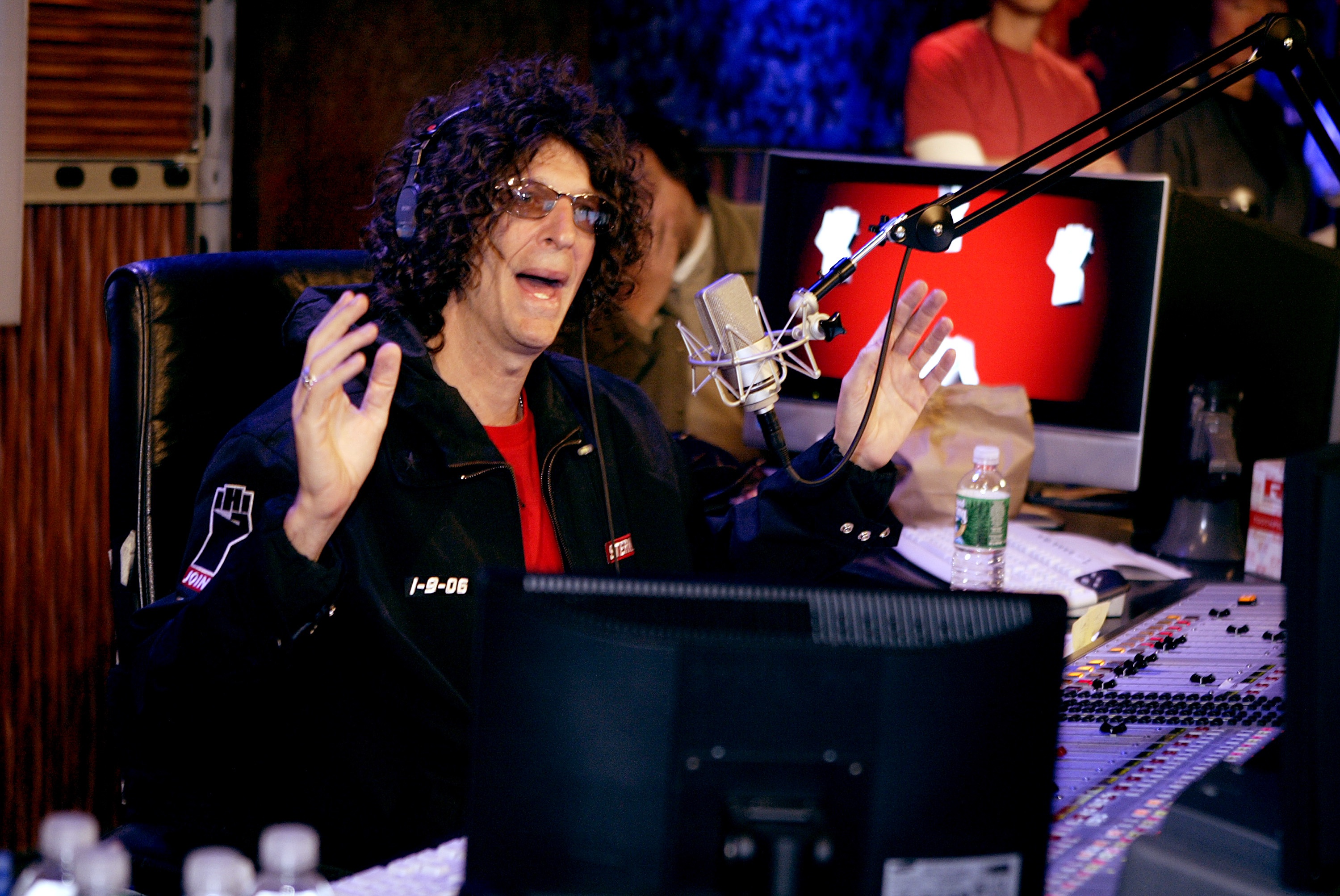
Feld said the Carr FCC’s guidance “says the exact opposite” of what the FCC’s 2003 ruling on Howard Stern stated “with regard to how this process is supposed to work. The Howard Stern decision expressly states that licensees don’t need to seek permission first.”
The 2003 FCC’s Stern ruling said, “Although we take this action in response to [broadcaster] Infinity’s request, we emphasize that licensees airing programs that meet the statutory news exemption, as clarified in our case law, need not seek formal declaration from the Commission that that such programs qualify as news exempt programming under Section 315(a).”
By contrast, the Carr FCC encouraged TV programs and stations “to promptly file a petition for declaratory ruling” if they want “formal assurance” that they are exempt from the equal-time rule. “Importantly, the FCC has not been presented with any evidence that the interview portion of any late night or daytime television talk show program on air presently would qualify for the bona fide news exemption,” the notice said.
The Lerman Senter law firm said that before the Carr FCC issued its public notice, broadcasters that met the criteria for the bona fide news interview exemption generally did not seek an FCC ruling. Because of the public notice, “stations can no longer rely on FCC precedent as to applicability of the bona fide news interview exemption,” the law firm said. “Only by obtaining a declaratory ruling, in advance, from the FCC can a station be assured that it will not face regulatory action for interviewing a candidate without providing equal opportunities to opposing candidates.”
This is “quite a switch,” Feld said. If this is the new standard, “then conservative talk radio hosts should also be required to affirmatively seek declaratory rulings,” he said.
FCC is “licensing speech”
Berin Szóka, president of think tank TechFreedom, told Ars that “the FCC is effectively creating a system of prior restraints, that is, licensing speech. This is the greatest of all First Amendment problems. What’s worse, the FCC is doing this selectively, discriminating on the basis of speakers.”
TechFreedom has argued that the FCC should repeal the news distortion policy that Carr has embraced, and Szóka is firmly against Carr on equal-time enforcement as well. As Szóka noted, the Supreme Court has made clear that “laws favoring some speakers over others demand strict scrutiny when the legislature’s speaker preference reflects a content preference.”
“That’s exactly what’s happening here,” Szóka said. “Carr is imposing a de facto requirement that TV broadcasters, but not radio broadcasters, must file for prior assessment as to their ‘news’ bona fides.” Ultimately, it means that TV broadcasters “can no longer have political candidates on their shows without offering equal time to all candidates in that race unless they seek prior pre-clearance from the FCC as to whether they qualify as providing bona fide news,” he said.
Carr’s enforcement push was applauded by Daniel Suhr, president of the Center for American Rights, a group that has supported Trump’s claims of media bias. The group filed bias complaints against CBS, ABC, and NBC stations that were dismissed during the Biden era, but those complaints were revived by Carr in January 2025.
“This major announcement from the FCC should stop one-sided left-wing entertainment shows masquerading as ‘bona fide news,’” Suhr wrote on January 21. “The abuse of the airwaves by ABC & NBC as DNC-TV must end. FCC is restoring respect for the equal time rules enacted by Congress.”
Suhr later argued in the Yale Journal on Regulation that Carr’s approach is consistent with FCC rulings from 1960 to 1980, before the commission started exempting the interview portions of talk shows.
“From 1984 to 2006, conversely, the Commission took a broader view that included less traditional shows,” Suhr wrote. “The Commission suggested a more traditional view in 2008, and again in 2015, each time qualifying a show because it ‘reports news of some area of current events, in a manner similar to more traditional newscasts.’”
But both decisions mentioned by Suhr granted bona fide exemptions and did not upend the precedents that broadcasters continued to rely on until Carr’s public notice. Suhr also argued that the Carr approach is supported by the Supreme Court’s 1969 decision upholding the Fairness Doctrine, although the Reagan-era FCC decided that the court’s 1969 rationale about scarcity of the airwaves could no longer be justified in the modern media market.
Don’t like a show? Change the channel
With the FCC having a 2-1 Republican majority, Democratic Commissioner Anna Gomez has been the only member pushing back against Carr. Gomez has also urged big media companies to assert their rights under the First Amendment and reject Carr’s threats.
When asked about Carr threatening TV broadcasters but not radio ones, Gomez told Ars in a statement that “the FCC’s equal-time rules apply equally to television and radio broadcasters. The Communications Act does not vary by platform, and it does not vary by politics. Our responsibility is to apply the law consistently, grounded in statute and precedent, not based on who supports or challenges those in power.”
FCC enforcement in the Trump administration has been “driven by politics rather than principle,” with decisions “shaped by whether a broadcaster is perceived as a critic of this administration,” Gomez said. “That is not how an independent agency operates. The FCC is not in the business of policing media bias, and it is wholly inappropriate to wield its authority selectively for political ends. When enforcement is targeted in this way, it damages the commission’s credibility, undermines confidence that the law is being applied fairly and impartially, and violates the First Amendment.”
Gomez addressed the disparity in enforcement during her press conference after the recent FCC meeting, saying the rules should be applied equally to TV and radio. She also pointed out that viewers and listeners can easily find different programs if one doesn’t suit their tastes.
“There’s plenty of content on radio I’m not particularly fond of, but that’s why I don’t listen to it,” Gomez said. “I have plenty of other outlets I can go to.”