



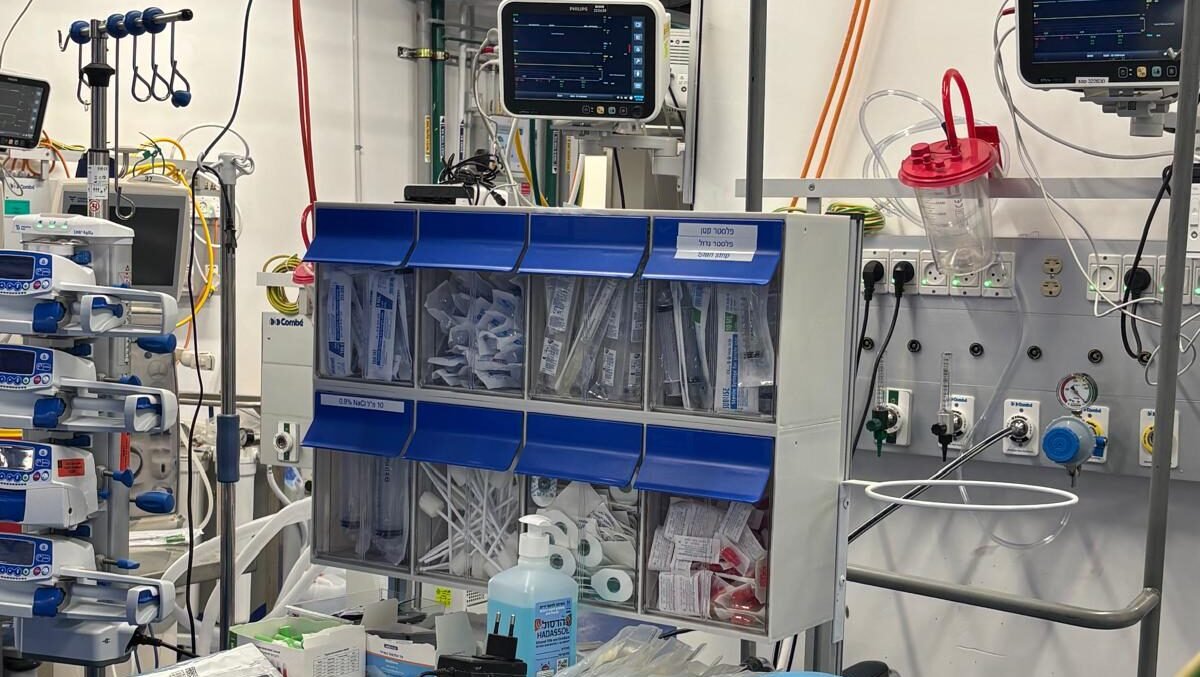
From improvised underground wards to fortified maternity units, Israel’s hospitals adapt in real time—keeping selected treatment going as casualties mount and the country braces for more
The underground hospital at the Gandel Rehabilitation Center at Hadassah Hospital Mount Scopus in Jerusalem was packed with more than 100 patients on Saturday evening. Within a few short hours, they had been transferred below ground to ensure their safety as Iran lobbed missiles at the Jewish state.
For Israel’s hospitals, this was not unfamiliar territory.
After a 12-day war in June 2025 forced the health system to move critical operations underground and manage emergency care under fire, medical teams once again found themselves activating wartime protocols. During that earlier escalation, Soroka Medical Center in Beersheba was struck by a missile. Just hours before the impact, patients in the ward that was directly hit had been moved underground.
This time, however, hospitals were warned in advance and had more time to prepare. Dr. Moshe Simons, an Orthodox internist who was working in the underground hospital on Shabbat, said that when sirens first sounded in June to announce that Israel was attacking Iran, hospitals did not know what to expect. Now, he said, the transition was far smoother.
“We didn’t know how long it would take,” Simons told The Media Line. “If it took us eight hours to get the patients downstairs last time, it took less this time.”
We didn’t know how long it would take. If it took us eight hours to get the patients downstairs last time, it took less this time.
Simons said the hospital had already mapped out which patients from each department would need to go underground and where they would be located. Lessons from the previous escalation had been implemented, and, he said, “things have gone much easier.”
Around 100 patients were underground at the Mount Scopus center and about the same number at its sister hospital in Ein Kerem, Jerusalem. Across the country, hospitals operated under similar conditions.
Still, challenges remain.
Simons said the biggest difficulty is working in one large, open room. Beds are separated by blue and white curtain dividers, making privacy a concern for some patients. Navigating the narrow central corridor while pushing machines and equipment is difficult, though manageable. The enclosed space has limited lighting and no fresh air. As a result, one key lesson from the previous escalation was to give staff more frequent breaks when sirens are quiet, allowing them time to step outside during their shifts.
One young woman, Miriam, who accompanied her friend to the hospital, said her friend had been transferred from Ein Kerem to Mount Scopus as the sirens went off. She described the situation as “not ideal” and said she hoped it would not last long. Still, she told The Media Line that everything had been handled professionally and emphasized that her friend remained in good spirits.
In accordance with national guidelines, only essential and limited elective and ambulatory activity is currently taking place at hospitals across the country.
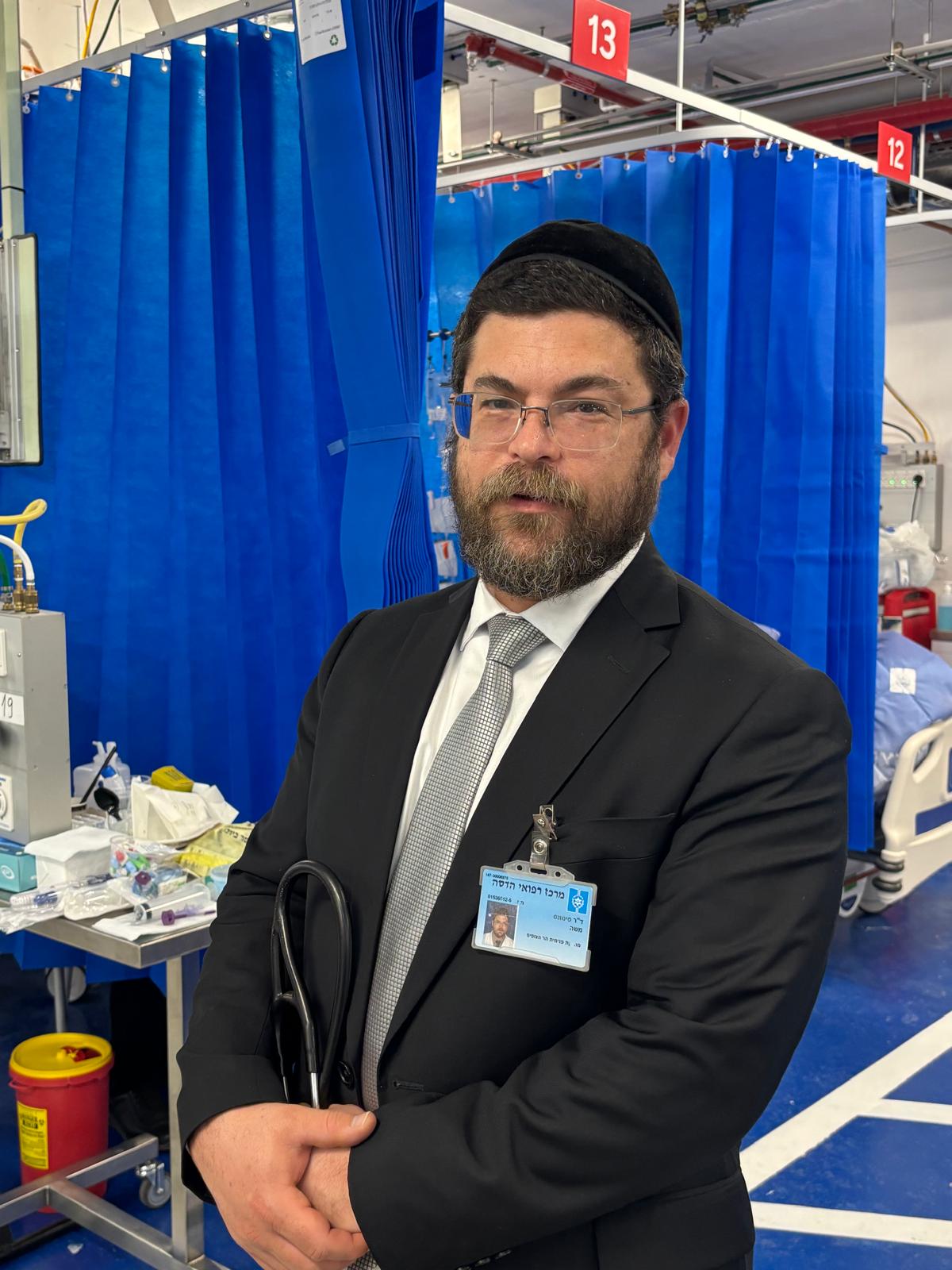
Dr. Moshe Simons, internist at Hadassah Mount Scopus underground hospital. (Maayan Hoffman/The Media Line)
Overnight, one woman was killed, and more than two dozen others were injured after an Iranian missile struck central Israel. The victim, in her 40s, was critically injured in the attack and was pronounced dead en route to the hospital. Two other casualties remained in moderate condition on Sunday morning. Children were also reported injured in the attack.
After the first day of missiles, most injuries were light and occurred as people ran to bomb shelters or were hurt in related incidents. However, Israel is bracing for more serious injuries.
On March 1, the second day of fighting, nine people were killed, 51 were injured, and 11 were unaccounted for after an Iranian missile hit a bomb shelter in Beit Shemesh. Later that day, three people were injured during a strike on a Jerusalem road.
During the 12-day war, 28 Israelis were killed, and more than 3,000 people were hospitalized.
Over the weekend, Magen David Adom (MDA) raised its alert level to the maximum. All MDA ambulances, mobile intensive care units, emergency Medicycles, and rapid response vehicles were fully staffed, and all 39,000 employees and volunteers were mobilized to provide fast and efficient medical response to any need.
The same was true for ZAKA. “In recent days, we conducted comprehensive inspections of all emergency vehicles, renewed equipment, and closed logistical gaps,” ZAKA Vehicle Officer Erez Madmon said. “I also instructed that sirens be replaced so they do not resemble air-raid alerts, out of sensitivity to the public and understanding the importance of calm and precision even during emergencies.”
I also instructed that sirens be replaced so they do not resemble air-raid alerts, out of sensitivity to the public and understanding the importance of calm and precision even during emergencies
MDA spent most of Saturday morning transferring bedridden patients, ventilated patients, and others to protected facilities, using special intensive care buses, mobile intensive care units, and ambulances. The first responder organization also called on the public to donate blood, especially those with type O, to be used in the event of an emergency. Several blood collection centers opened to accept donations.
Meanwhile, the Health Ministry issued its own set of guidelines, calling on all mental health departments to continue operating while enabling early discharge when possible. Health funds have opened support hotlines to provide emotional assistance and help people cope with stress, anxiety, tension, and other challenges.
Geriatric facilities and rehabilitation hospitals were also asked to consider early discharges and create space in case of a broader emergency.
There were sirens during my contractions, but thanks to the protection, I did not have to move and remained with my regular team.
At Assuta Ashdod hospital, however, business continued as usual. All complexes, including the nursery, mother and newborn department, neonatal and NICU units, are already fully protected and allow continuous and safe care even during missile attacks, without the need to transfer patients or interrupt treatment.
Assuta was the country’s first public hospital to be completely fortified when it opened in 2017.
“There were sirens during my contractions, but thanks to the protection, I did not have to move and remained with my regular team,” Daniela Cohen, who delivered her baby at Assuta on Saturday, said. “I stayed in the same room with the same familiar team guiding me calmly and professionally. The feeling is one of complete security, without unnecessary stress, and the security situation does not harm the continuity of care or this special moment.”
Despite the tension, there were also moments of quiet reflection inside these facilities. On Saturday evening, a special Havdalah ceremony was held to mark the end of the sabbath at Shaare Zedek Hospital in Jerusalem.
It was important for us to pause for one brief moment and conduct Havdalah together with the patients’ families and with the dedicated teams
“Even in complex moments, both personally and medically, it was important for us to pause for one brief moment and conduct Havdalah together with the patients’ families and with the dedicated teams who joined the effort and have been working long hours to both treat patients and safeguard their security,” explained Professor Philip Levin, director of general intensive care at the hospital. Six of those injured by the missile attack in Beit Shemesh on Sunday, including a four-year-old boy, were evacuated to Shaare Tzedek.