



Beijing’s escalating restrictions on Japanese defense-linked companies have largely been covered as a bilateral story.
Yet the implications extend well into Southeast Asia, where regional countries are woven into many of the same supply chains now under pressure – and where the room for smaller states to navigate between the United States and China continues to shrink.
On February 24, China’s Ministry of Commerce placed 20 Japanese organizations – including subsidiaries of major defence contractors Mitsubishi Heavy Industries and IHI Corporation, the national space agency JAXA, and the National Defense Academy – on a list banning them from receiving dual-use items with both military and civilian applications from China.
A further 20 organizations, including carmaker Subaru and Sumitomo Heavy Industries, were placed on a watch list requiring case-by-case approval. The move followed a broader January measure banning dual-use exports to Japan for any end use that could strengthen its military.
The two-step escalation – from broad restrictions in January to targeting specific companies in February – suggests a deliberate rather than reactive approach. The structure points to something more consequential than symbolic protest: an operational form of economic pressure with real consequences for Japanese industry, and one whose logic could easily extend beyond this bilateral relationship.
The proximate trigger was Prime Minister Sanae Takaichi’s November statement that Japan could help defend Taiwan in the event of a Chinese invasion. Beijing’s response has been wide-ranging, encompassing tourism restrictions, seafood import bans, canceled cultural exchanges and now supply-chain measures targeting Japan’s defense-industrial base.
This is another reminder about Beijing’s red lines: the point at which it is willing to impose real economic costs over statements about Taiwan. ASEAN members have generally avoided taking sides on Taiwan’s status, but the space for that approach is narrowing.
Countries deepening security ties with the United States or Japan – most visibly the Philippines – may find that even relatively modest rhetorical shifts are enough to set off a graduated pressure campaign.
Beijing has framed its approach under its 2020 Export Control Law using the language of preventing weapons proliferation, making it harder to challenge through international trade rules than the earlier quota-based restrictions the World Trade Organization ruled against in 2014. If this approach proves effective against a G7 economy, smaller economies have reason to take notice.
Southeast Asia in the diversification trap
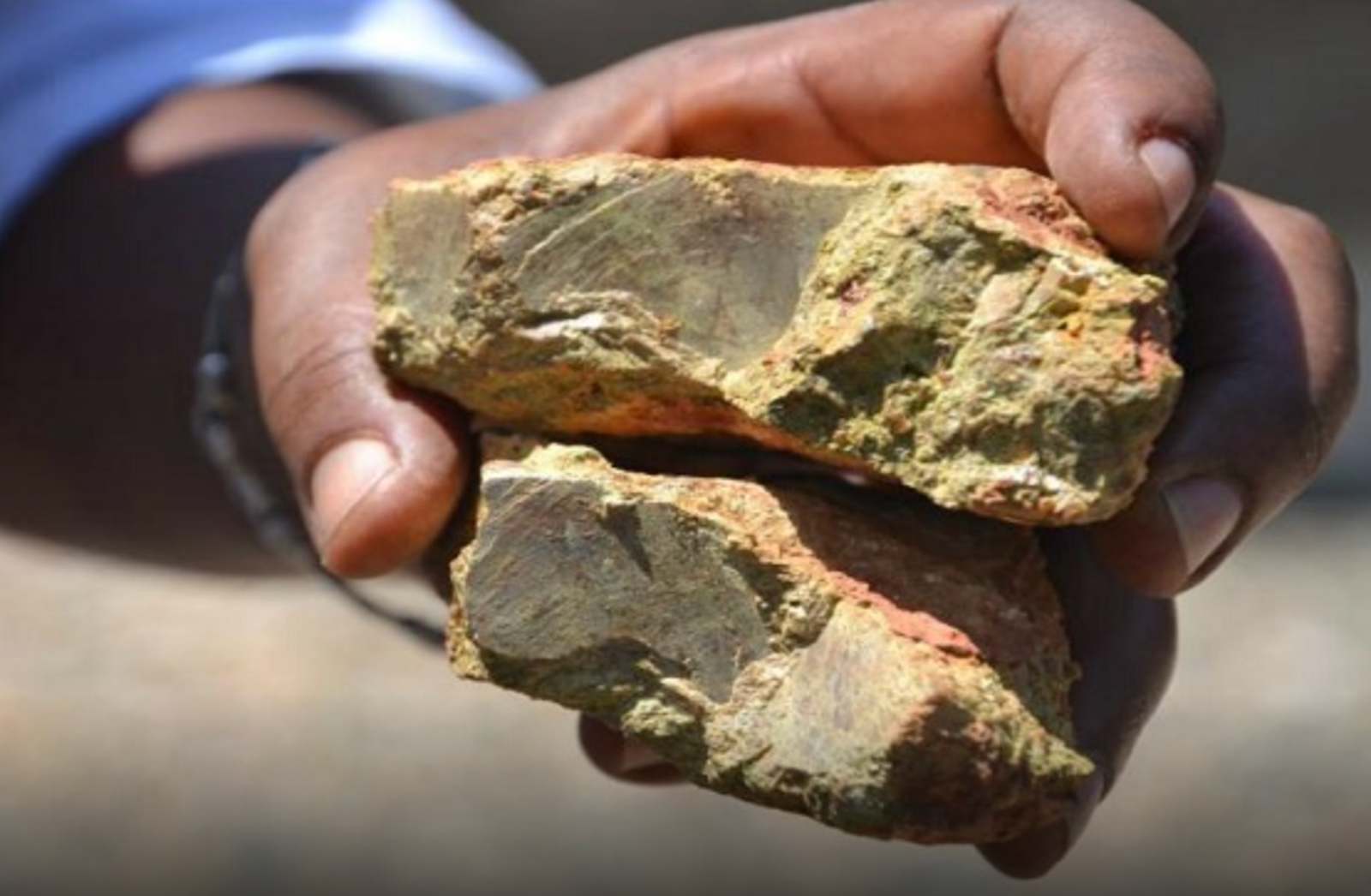
The rare earth dimension of this dispute has direct ASEAN implications. China accounts for around 70% of global rare earth mining and, according to the International Energy Agency, 94% of the world’s sintered permanent magnets – the high-performance components at the heart of EV motors and defense systems.
That dominance is precisely why Japan has spent 15 years trying to reduce its dependence on Chinese supply – an effort that runs significantly through Southeast Asia.
Vietnam is at the center of this diversification push. Shin-Etsu Chemical operates rare earth refining and magnet manufacturing facilities in Hai Phong province with a combined capacity of around 2,200 tonnes per year – one of its only sintering facilities outside Japan.
But capacity has not expanded since the site was completed in 2018, and the operation still relies on feedstock that traces back to Chinese-dominated supply chains.
Japan’s earlier attempt to develop Vietnam’s Dong Pao deposit in Lai Chau province – one of the world’s largest rare earth mines – illustrates how fragile these efforts can be. Japanese investors abandoned the project after China drove down global prices; a 2023 restart was derailed when a local partner’s chairman was arrested.
As of early 2026, the planned auction of mining concessions still has not taken place. Japan’s most ambitious long-term alternative – a deep-sea mining test that retrieved rare-earth-rich sediment from 6,000 meters beneath the Pacific in February – remains years from commercial viability.
How much this matters was demonstrated in April 2025, when China imposed export controls on seven heavy rare earth elements in response to US tariffs. The restrictions were global, not Japan-specific, but Japanese automakers including Nissan and Suzuki reported supply disruptions, with Suzuki suspending production of its Swift model.
European prices for some rare earth products reached up to six times Chinese prices. In October, Beijing escalated further, introducing extraterritorial provisions that would require Chinese export licenses for foreign-made products containing Chinese-origin rare earths above a 0.1% value threshold.
Those October controls were suspended for a year as part of the Busan truce, but Beijing delayed rather than withdrew them – and the April licensing regime remains operational. The architecture of control exists; it is merely waiting to be switched back on.
Vietnam’s own ban on unprocessed rare earth exports, effective January 1, 2026, signals Hanoi’s ambition to process minerals domestically rather than simply dig them up and ship them out. But China remains deeply involved in the earlier stages of the supply chain.
A Council on Foreign Relations report shows that after mid-2025, China’s exports of finished permanent magnets returned to roughly normal levels, but exports of rare earth metals and compounds – the upstream inputs that processors in Southeast Asia need – remained below historical baselines. Beijing is selectively easing pressure on downstream products while retaining its grip on the raw materials that matter most.
The risk for Southeast Asian economies is that they become links in a supply chain designed to reduce reliance on China, but one that still depends on Chinese inputs at critical points. The US has signed critical minerals frameworks or agreements with more than 20 countries since mid-2025, including with Malaysia, Thailand, Indonesia and Japan.
Being part of this emerging architecture offers economic opportunity – but it also means exposure to the same kind of pressure now being applied to Japan, particularly if Beijing reactivates its extraterritorial controls when the current pause expires in November 2026.
Compliance risks beyond China’s borders
These dynamics are not limited to direct trade between China and Japan. The February controls explicitly prohibit overseas companies and individuals from transferring Chinese-origin dual-use goods to the 20 blacklisted organizations.
Third parties, including Japanese subsidiaries operating in Southeast Asia, could face criminal prosecution under Chinese law if they facilitate transfers that violate the rules.
A Vietnamese rare earth processor supplying a Mitsubishi subsidiary, or a Thai electronics component maker feeding into IHI’s supply chain, now faces regulatory exposure that could lead them to pull back from these relationships preemptively – extending Beijing’s reach without requiring any diplomatic pressure on ASEAN members.
The China–Japan export control dispute shows few signs of easing, particularly with Prime Minister Takaichi’s White House visit scheduled for mid-March.
For Southeast Asian policymakers, the question is whether their economies are prepared for a world in which control over critical minerals is routinely used as a tool of geopolitical pressure. And whether new supply chain arrangements genuinely spread risk or merely shift it to different points that are still vulnerable to Chinese control.
Lam Duc Vu is a Vietnam-based risk analyst focused on regional trade and geopolitics