



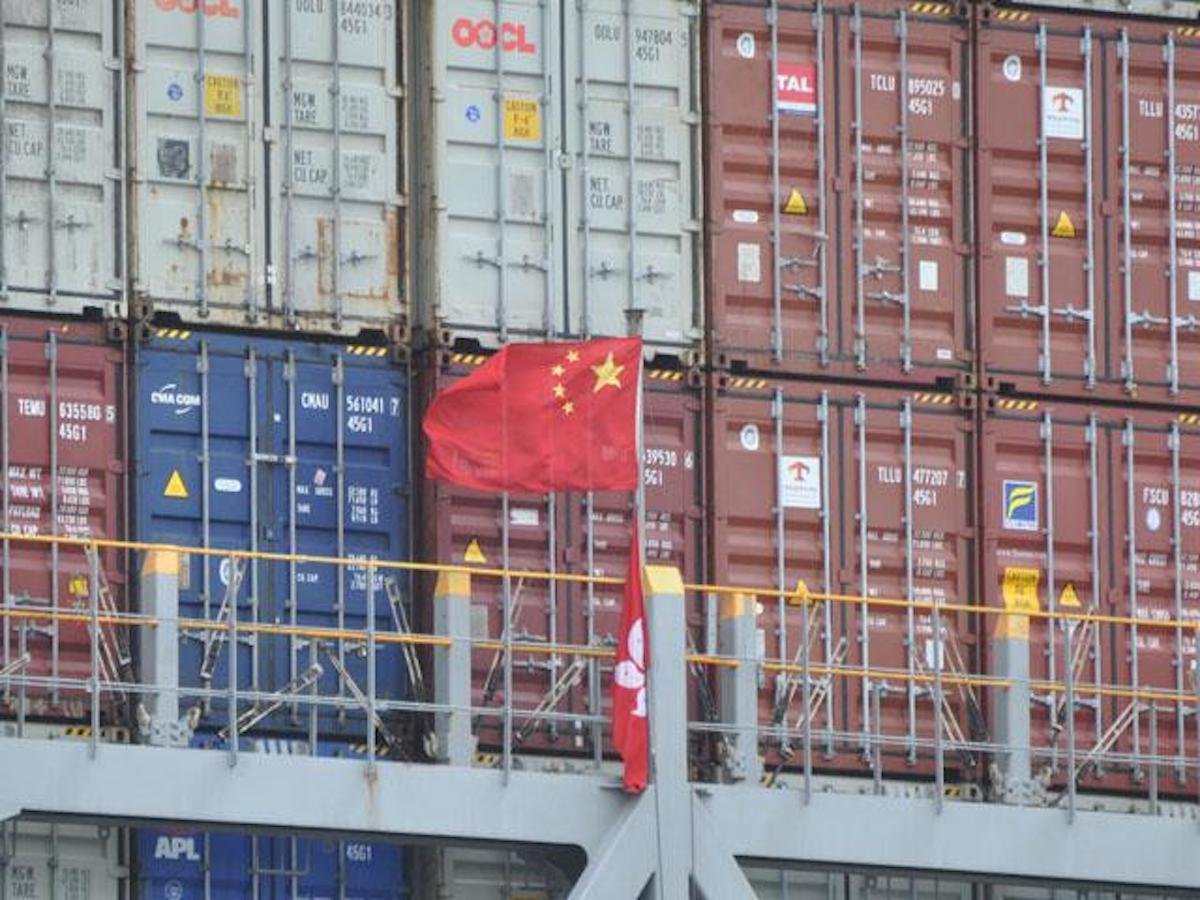
China just notched a historic milestone: a trade surplus exceeding US$1 trillion in 2025, with exports up 5.4 % despite the trade war with the United States. Yet China’s export story isn’t just about volume — it’s about a striking shift toward high-value, high-tech dominance.
Car exports surged past 6.5 million units, up from 5.86 million in 2024, with EVs grabbing big market share from Japanese and European competitors. Semiconductor exports jumped 24.7 % and shipbuilding exports rose 26.8 %. On paper, this looks like a sophisticated trade machine.
But this dazzling global triumph carries a hidden twist — it is quietly tightening the strategic noose around Beijing, shrinking its room to maneuver at home and abroad. And the problem is structural.
Real estate, once the economy’s biggest engine, is in deep decline. Infrastructure spending has lost its kick. Private consumption sat at just 39% of GDP in 2024, far below the global average of 55% . That leaves exports as the most reliable way to keep factories running and local government budgets solvent without piling on dangerous new debt.
In reality, this creates a critical vulnerability. When growth depends on external demand, macroeconomic stability becomes less a domestic policy choice and more contingent on global market predictability and foreign industrial policies.
Research from the Rhodium Group and Atlantic Council shows the squeeze: as export dependence deepens, external demand swings hit harder – partly because domestic stimulus yields diminishing returns, with each round adding more debt for less real activity.
The result is a feedback loop: weak domestic traction forces China to rely on exports, and each year of export‑led growth locks the economy further into that vulnerable path.
This is the first paradox: rising trade power coincides with declining policy autonomy. The bigger the export engine, the less freedom Beijing has to take bold domestic steps or geopolitical risks.
The export model buys short-term calm at the price of long-term freedom. Success breeds dependence, and dependence breeds inertia. When the economy faces downward pressure—as it does now with real estate collapsing and infrastructure spending exhausted—the export model looks like a lifeline rather than a trap.
Shifting inward could mean slower near-term growth, sectoral employment disruptions and financial strains from unwinding imbalances—costs that rise the longer export dependence sustains the current structure.
This creates a harsh irony: the optimal time to rebalance was yesterday, but the political will only materializes when conditions make the transition most painful. Although China has pursued elements of this reorientation—through plans prioritizing consumption, services and social protections—the shift remains partial and gradual, constrained by this timing trap.
When exports sustain millions of jobs and complex industrial chains, even the possibility of disruption is alarming. That’s why major geopolitical issues have largely been put on pause. In the case of Taiwan, the sheer scale of potential supply‑chain and market fallout has turned what once seemed like a clearer strategic choice into an economically constrained one.
The second paradox is already materializing. The larger China’s surpluses, the more probable —and persistent — the institutionalized pushback. Europe, long a champion of open trade, is starting to change its tune. Chinese exports to the EU surged 15 % in 2025, prompting Brussels to deploy counter-subsidy probes, carbon border taxes and forced local production rules.
The US is pushing reshoring through the Inflation Reduction Act and CHIPS Act. Even nearby Southeast Asian countries are becoming more cautious about Chinese factories moving in. China now runs surpluses with almost 170 countries.
In late 2025, French President Emmanuel Macron warned that without real rebalancing, Europe will have “no choice” but to take protectionist measures against China. The message was clear: chronic trade imbalances will not be left to markets. They will be managed by rules that make life harder for Chinese exporters.
But tariffs and local content rules are merely the first line of defense. The deeper response targets the source of China’s competitive edge itself: advanced technology. When trade becomes a security issue, technology gets weaponized.
Despite the 24.7 % surge in semiconductor exports, Washington added 140 Chinese firms to its Entity List and launched investigations into Chinese-made legacy chips. AI, semiconductors and batteries—fields where China is racing ahead—are increasingly seen as strategic threats, inviting stricter controls precisely in the sectors where China is becoming most competitive.
By comparison, Germany and Japan show that export‑driven giants can rebalance when exports hit structural limits. Germany turned Industry 4.0 into a genuine pivot, using automation, precision engineering, and social protections to pull growth inward.
Japan, pushed by the 1985 Plaza Accord, redirected innovation toward its aging society, making healthcare and robotics reliable sources of home‑grown demand. However, both enjoyed advantages China lacks, namely US security guarantees and favorable global conditions, which also explains why China’s transition is even harder.
The real test for China is no longer whether it can dominate global trade markets—it already has. The question now is whether it can build an economy capable of standing on its own foundations when international markets turn unpredictable, contested or politically constrained.
The paradox of China’s $1 trillion surplus is that it reflects both extraordinary industrial strength and a narrowing path forward. China’s ability to shift inward—deliberately, gradually and without jeopardizing the gains of the past two decades—will determine not only its economic trajectory but the scope of its future strategic autonomy.
Dr Jon Yuan Jiang is an analyst who holds a PhD in media and communication from Queensland University of Technology, a master’s in political economy from MGIMO University in Moscow and a bachelor’s in law from Shanghai University.
Fluent in Chinese, English and Russian, he specializes in the Belt and Road Initiative, China’s relations with the world and global political narratives. He has published widely in various media outlets and think tanks.